How Out Was Kit Marlowe?

I asked a variation of this question a few weeks ago on Twitter and Facebook but nobody took me up on it. Since those two channels are very time-sensitive (if you’re not there when it’s posted you’ll usually miss it forever), I thought I’d post it here as well. I still get traffic on posts from ten years ago.

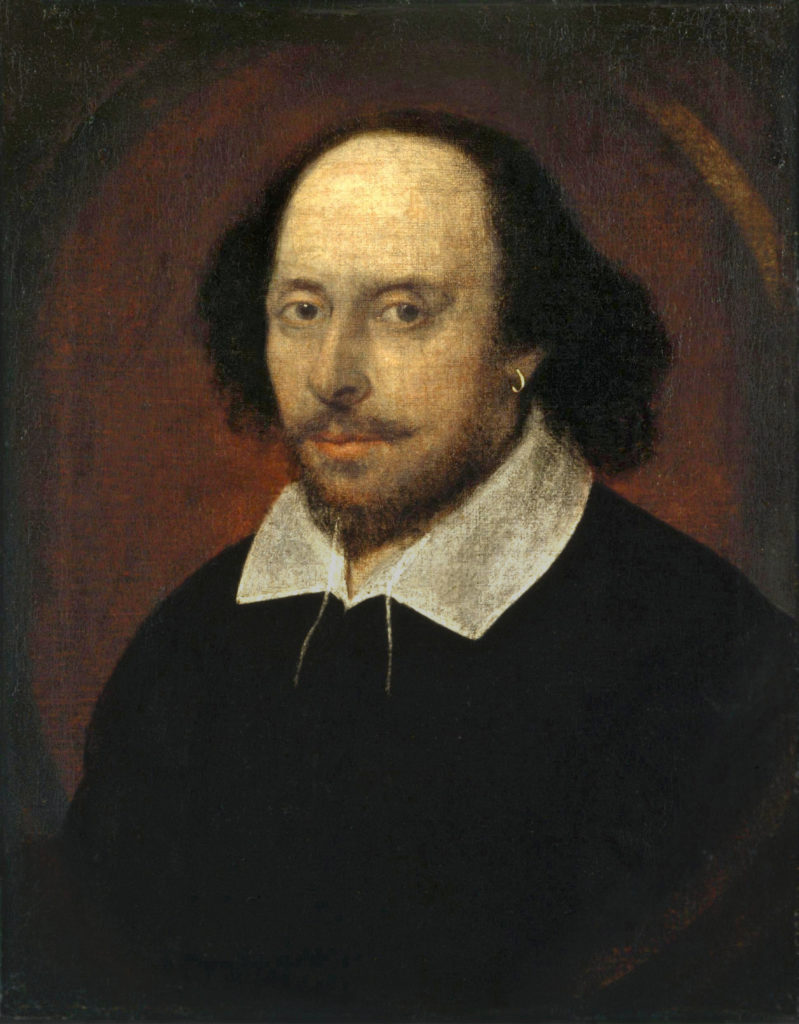
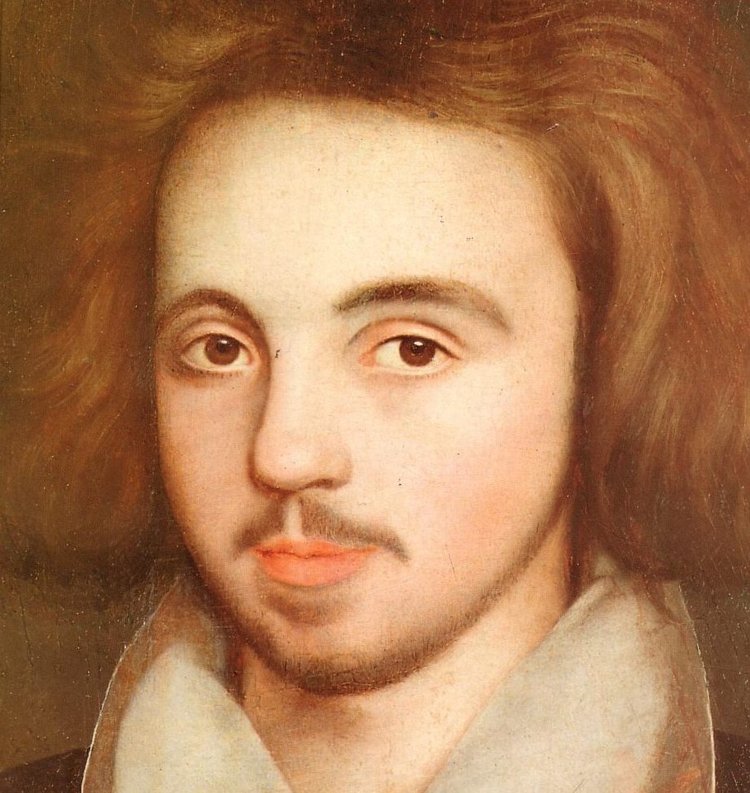
The question is this. We love to debate whether Shakespeare was gay. But from everything I’ve read we all seem to be in agreement that Christopher “Kit” Marlowe, Shakespeare’s popular contemporary, definitely was. Can somebody who is expert in this area elaborate a little bit?

Do we have actual evidence in Marlowe’s words? Or just an interpretation of his work that’s a little more on the nose than Shakespeare’s?

If it is somehow obvious now, was it also obvious then? What would it have meant to be a gay man in Elizabethan England?

And the most interesting question to me, would Shakespeare (and Marlowe’s other fellow writers) have known? How exactly would that play out? Maybe it’s one of those “poorly kept secrets,” where he was never really “out” to the world, but only his inner circle?

Of course, this is all based on my assumption that Shakespeare and Marlowe knew each other quite well. Marlowe didn’t die until Shakespeare was something like 29 years old. Aren’t there parts of Henry VI that are direct homages to Marlowe? I could be entirely wrong here.

I hope somebody out there knows what I’m trying to say. It feels like what we “know” about Marlowe must open up more questions than it answers. But I’ve never really seen much discussion about the answers to those questions.
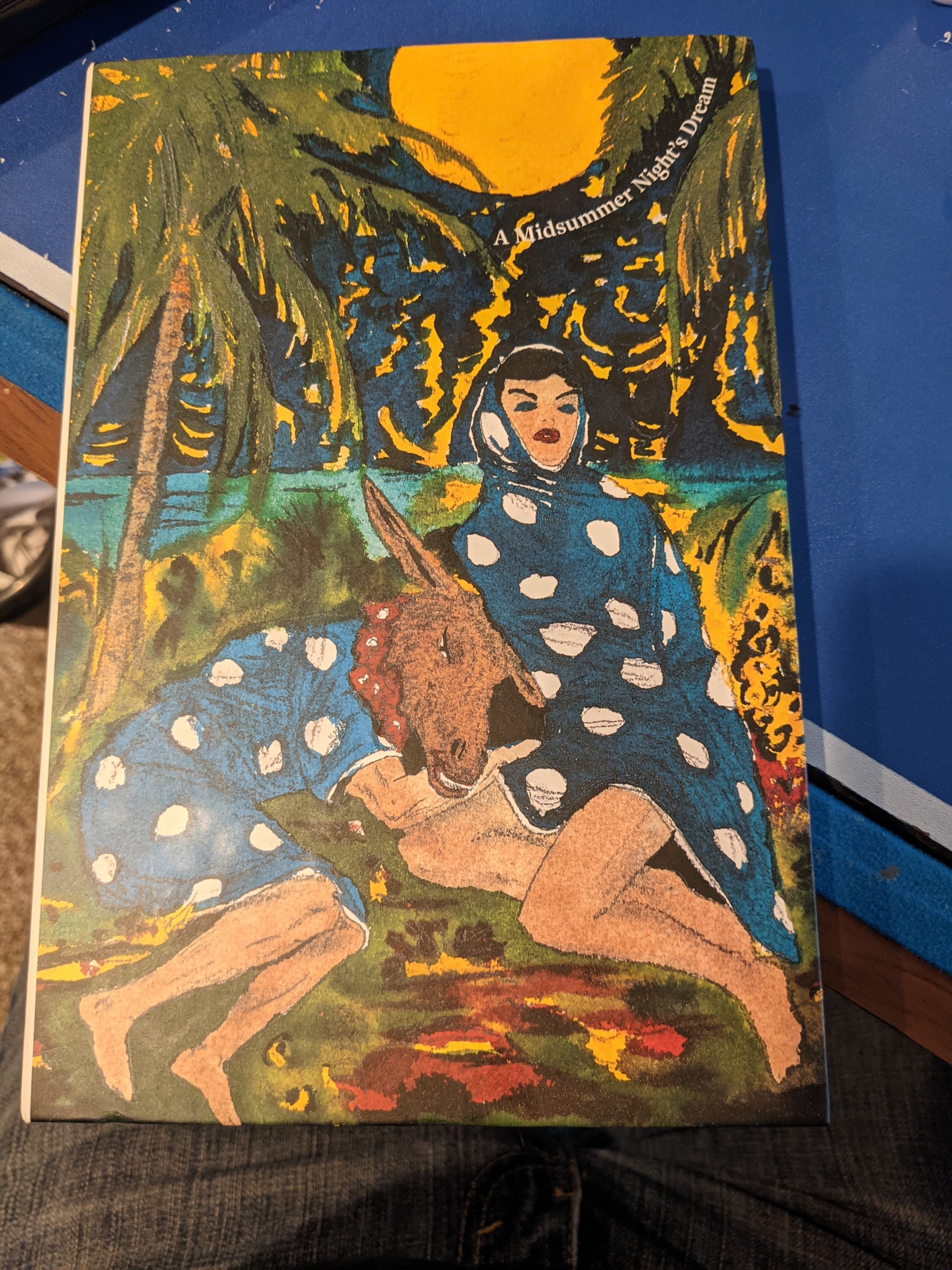
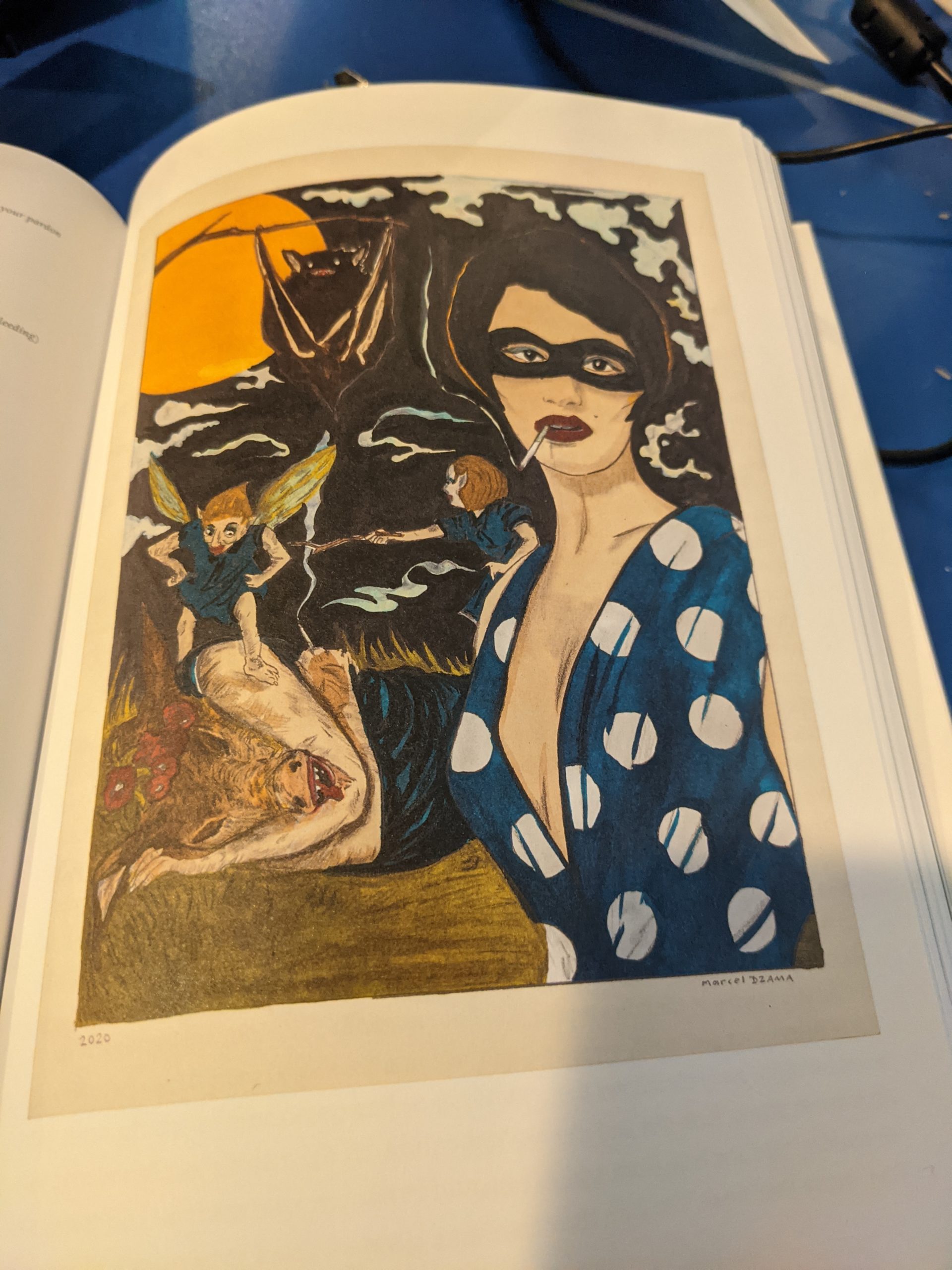
Review : David Zwirner’s Dream, with Marcel Dzama

I realize that’s an awkward title, but there’s a lot of relevant information to impart and I wanted to hit the important bits. A Midsummer Night’s Dream is a very long play title. This is the second review of books I received from David Zwirner. For the first, Othello, see here.

A Midsummer Night’s Dream is an interesting play to me, the casual fan. Often thought of simply as “the one with the fairies”, the one that’s safe (and adorable!) to have five year olds perform, running around in their sparkly wings, reciting famous lines they don’t understand. But it’s got that darker side, too. It’s also the story of a husband whose wife is not sufficiently obedient, so he drugs her and takes what he wants. But then there’s also the overarching theme of dreams and reality and telling the difference between them, of putting on masks and presenting yourself to the world as someone or something that you’re not, voluntarily or not.

I guess what I’m trying to say is that there’s a whole lot of room when it comes to interpreting A Midsummer Night’s Dream.

Which brings me to our review. I gave the back story in the previous Othello blog post, but David Zwirner is an art gallery. These books are not new academic treatments of Shakespeare. The text, though well laid out and visually appealing, is the same text we’ve all seen before – line numbers, glossary terms, and so on. No extra commentary.

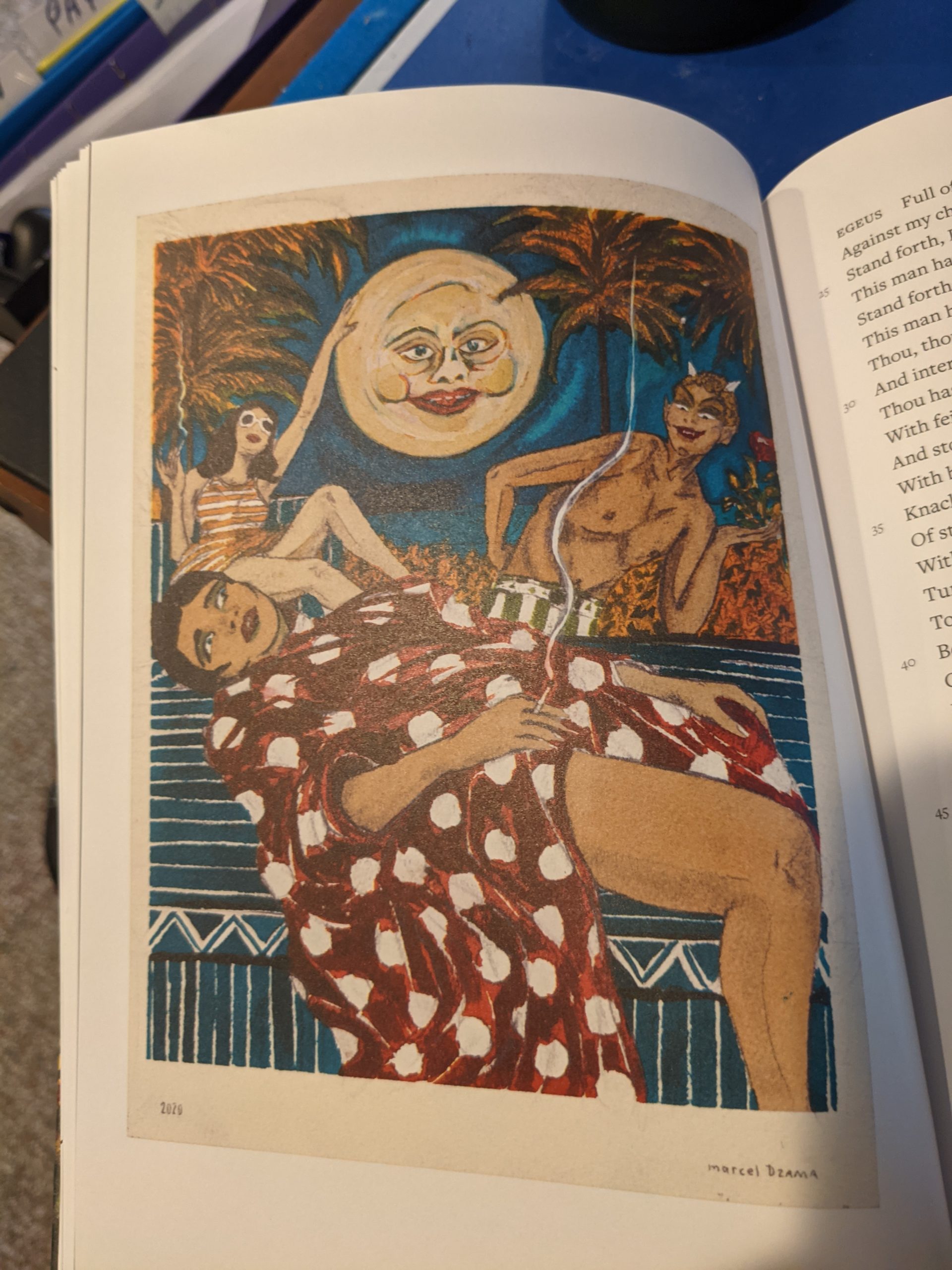
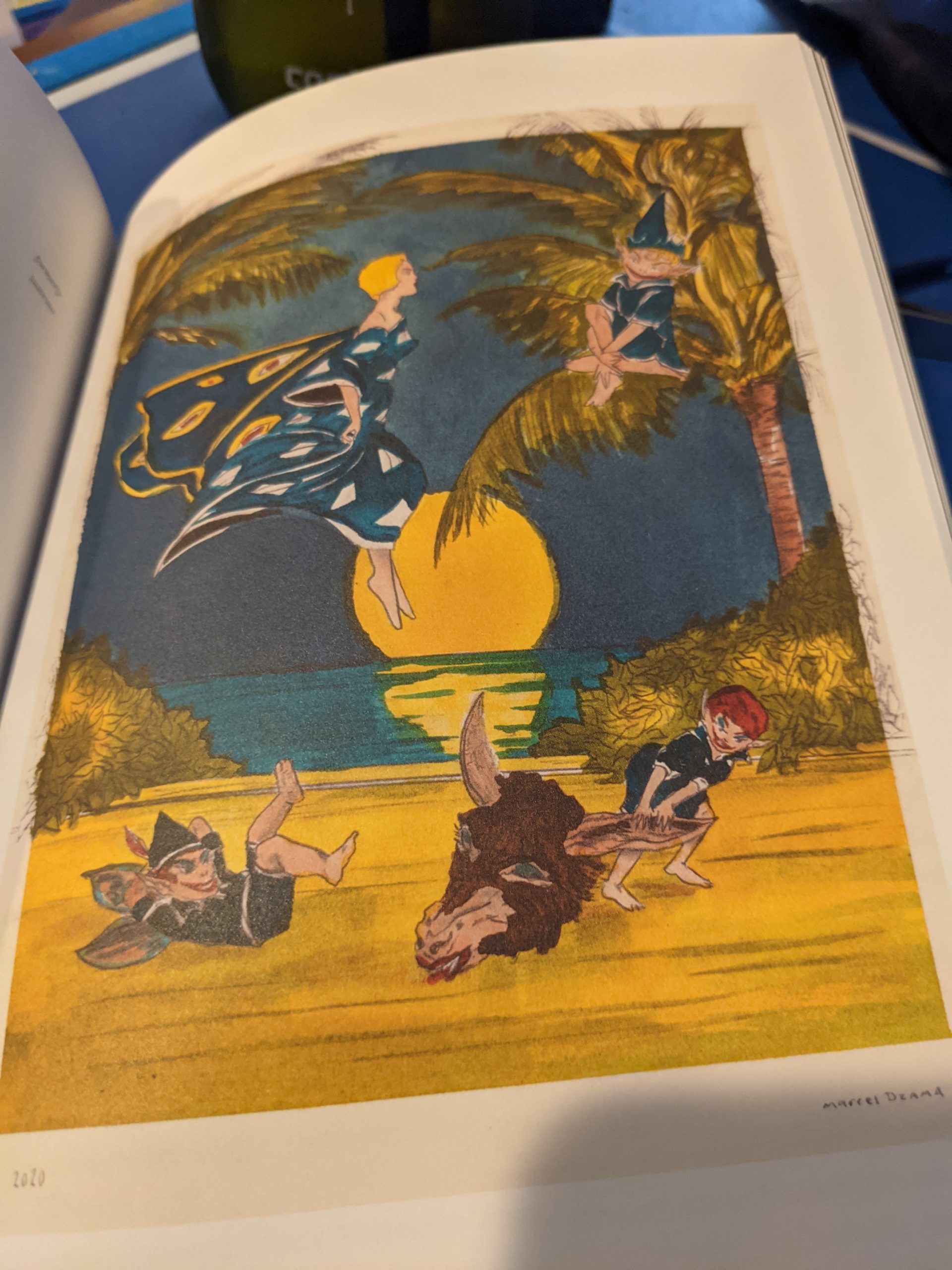
These books are about the art. It’s like walking through a museum, where Dream is the theme. You turn a corner and you see a painting, and next to it, the relevant scene from the play. (That’s not an entirely accurate analogy as this is the full text of the play, not just excerpts). And you admire the portrait and you examine the text and you discuss and interpret their connection. What is the artist trying to say here?

https://www.davidzwirnerbooks.com/product/william-shakespeare–marcel-dzama-a-midsummer-nights-dream
What do you think? The color palette and repetitive geometric patterns are pretty consistent throughout all the images. The moon makes many appearances, as do the fairies and the classic Pan-like satyr Puck. Anybody else getting like an Audrey Hepburn vibe off that first one, the way she’s got the thing wrapped around her head? Is that who I’m thinking of?

I feel a little bad, because I’m not completely sure how to usefully review a book like this where it’s all about the art. Art is something you want to see and experience for yourself. I run a blog specifically, and about Shakespeare specifically, because that universe is almost entirely about the words. I can copy and paste and type new words all day long. But I don’t have the experience or education in art to adequately describe this book. Hence, the best I can do is present my own opinion and maybe some badly framed images.

Schitt’s Creek Shakespeare

Normally spotting Shakespeare references in TV shows is Bardfilm’s territory, but it’s late on Shakespeare’s birthday and I’m in the mood 😉

Schitt’s Creek took the tv world by storm last year, right as it was wrapping up its final season. I’m not going to go into why the show is so good, because I don’t think I could do it justice. It’s not, however, a show in which you expect to hear any Shakespeare. Unless you listen very closely, that is.

https://www.dailymotion.com/video/x7u6ou6

Unlike YouTube I can’t link directly to the timestamp I want, unfortunately. And this episode is near the end of season 4, so there’s going to be hefty spoilers if you’re not already watching the show. But! With that all out of the way, when two characters announce that they’re going to bestow a particular honor on Catherine O’Hara’s Moira Rose (near the very end of the episode), she responds by declaring, “An honor that I dream not of!”

Anybody? That’s Juliet’s response when her mother asks her how she feels about getting married.

Having caught that (after watching the whole series several times), I’m now left wondering if I should go back and listen more carefully for other references. It is not a show that feels the need to bog itself down with Shakespeare. Given that O’Hara’s character is a former actress there’s a handful of Shakespeare jokes, but as far as I can tell this is the only actual quote I’ve heard.

Mystery Men of Shakespeare

I discovered this weekend that the 1999 Ben Stiller movie Mystery Men was finally on Netflix. When my kids were younger I kept coming back around to it as something I wanted to show them, given the rise of superhero movies, but it was never available for streaming. This one’s weird, it’s more of a “super anti-hero” movie where a bunch of normal guys with arguably no powers at all wish they were heroes. You’ve got Paul Reubens as “the spleen”, who farts at people as a weapon, Hank Azaria as the fork flinging Blue Raja, William H Macy as the Shoveler (“God gave me a gift. I shovel well, I shovel very well”) … the list goes on, all easily recognizable character actors. Janeane Garofalo as “The Bowler”. Ben Stiller as “Mr. Furious”. You won’t necessarily like him when he’s angry, but you won’t have to worry too much about it.

Why are we talking about this? Because when we sat down to watch it I noticed something I hadn’t seen twenty years ago – William H Macy delivering his version of Henry V!

What’s Your Status?

Here’s something different. What exactly did class and status mean in Shakespeare’s time? Can we put it into a modern perspective?

Middling Culture has put together a status calculator to answer that question. You provide your answers for questions about your job, education, gender, and general position in the community (do you hold an office with the church?) Then it tells you how you would have fared back in Shakespeare’s day.

Elite Middling/New Gentry
You are of new gentry status! This means that you were born to a middling family, but you may have been granted a coat of arms in your lifetime, and that you became extraordinarily wealthy.

I think that’s good? Of course a number of the questions make no real modern sense (do you have a coat of arms? Were you gifted your accomodations by a wealthy noble?) so you’ll have to take some creative guesses. I actually ran through it twice and forgot what my first answers were.

They look very excited about the project, and there’s a number of requests for feedback as well as informative links about how the calculator works. I think it might be cool to see some of the answers side by side with your final result, you know? How much does gender play a role? What about the coat of arms, or your position in the church? Is there any individual answer that flips your status entirely?